
We Have A Generation Losing Their Sense Of Agency.
This week’s BBC coverage warning that one in six young people could soon be outside education, employment, or training should concern every parent, educator and policymaker in the country.
But I think we need to be careful about how we frame this conversation because beneath the statistics sits something much deeper. Not simply a lack of jobs crisis.
Maybe it’s an agency crisis?
For years we've been asking whether young people have the right qualifications but we should also be asking whether they feel capable of navigating the world those qualifications are supposed to prepare them for.
Missed Opportunities
Many young people leave education having learned how to pass exams, but not necessarily how to handle rejection, uncertainty, social pressure, manipulation, setbacks or self-doubt.
They've grown up in a world where opportunities can feel distant, where comparison is constant, and where much of life happens through a screen.
When applications go unanswered, friendships become complicated, plans fall apart or confidence takes a knock, many have never been shown how to respond without retreating. They aren’t weak, it’s just that nobody taught them. The rise in young people disengaging from education, employment and training should concern us all. What we're witnessing isn't a generation lacking potential. It's a generation struggling to maintain a sense of authorship in an increasingly complex world.
A world of:
- constant comparison
- algorithmic pressure
- digital overwhelm
- social uncertainty
- shrinking first-job opportunities
- rising rejection
- endless noise
...and very little genuine preparation for modern adult life.
Is Graduating as Exciting as It Used to Be?
One graduate in the BBC article had applied for over 400 jobs and received just one interview.
Imagine the psychological impact of that.
At some point, repeated rejection stops feeling like feedback and starts feeling personal.
Confidence erodes. Motivation collapses, agency weakens and eventually, young people quietly withdraw. Not because they are lazy but because they no longer feel effective to stay in the game.
For years, we’ve focused heavily on academic outcomes while assuming confidence, resilience and decision-making would somehow develop naturally alongside them but increasingly, they aren’t.
Today’s young people are often academically connected but psychologically underprepared. They know how to revise for exams but haven’t been taught how to:
- handle rejection without collapse
- regulate under pressure
- trust discomfort signals
- enforce boundaries
- navigate manipulation
- recover from setbacks
- tolerate uncertainty
- or maintain a sense of direction when life becomes unstable
The Missing Link
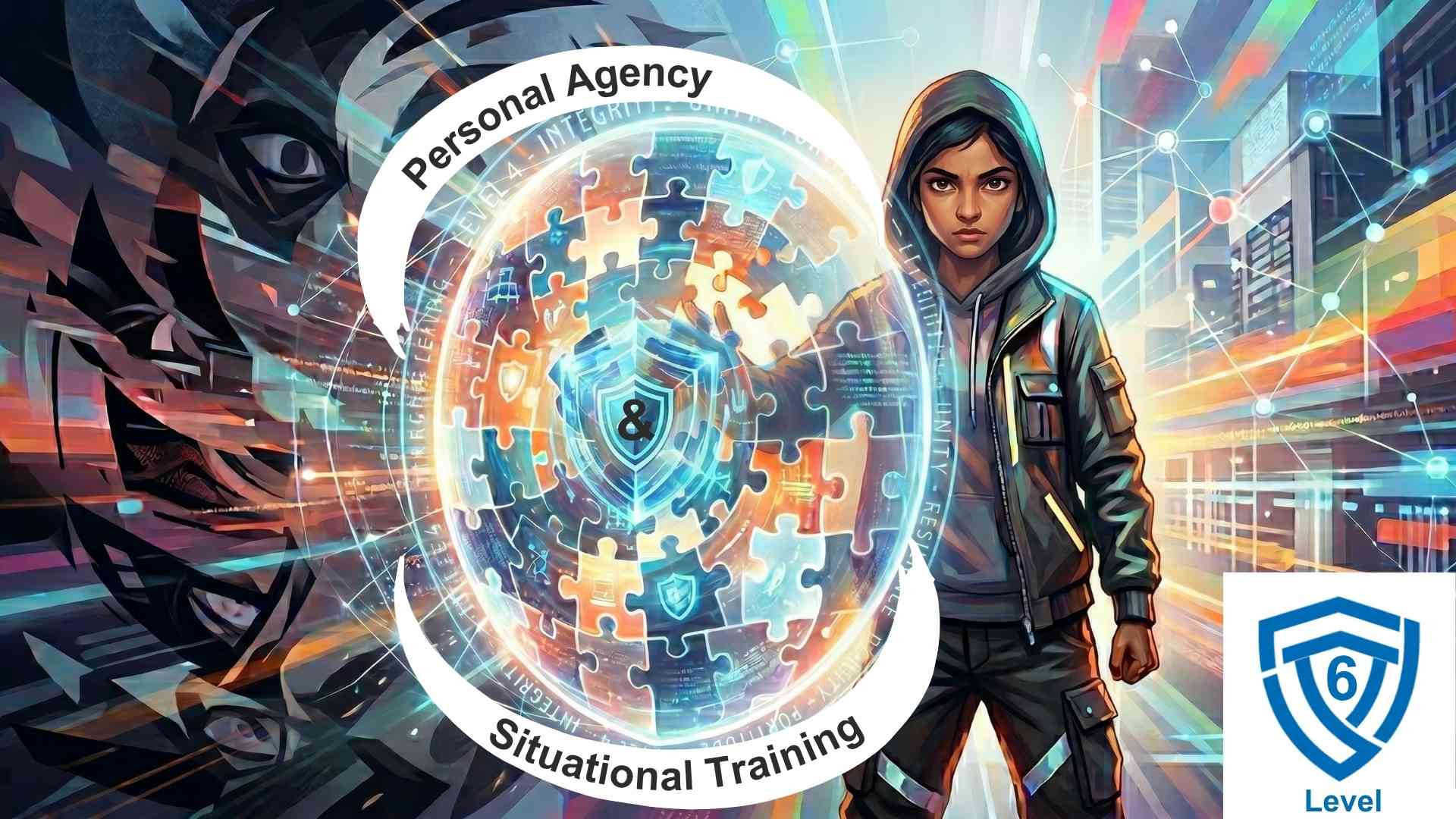
That’s one of the reasons we developed PAS — Personal Agency & Situational Training.
Not as a fear-based self-defence programme but as a way to ‘live ready’.
PAS is a modern life-readiness framework. Safeguarding shouldn’t stop at simply teaching young people what to avoid, we also need to help build capability.
The capability to think clearly. Capability to stay grounded. Capability to recover. Capability to act and capability to navigate modern adulthood without becoming psychologically overwhelmed by it.
The defining challenge for many young people today isn’t a lack of intelligence, it’s a lack of stable authorship. Too many feel like passengers in systems they no longer understand or trust.
Perhaps the most important thing we can do now — as parents, schools, mentors and communities, is to help them rebuild that sense of authorship before they disappear quietly into discouragement.
When a young person stops believing their actions matter, that disengagement becomes very
difficult to reverse.
This generation does not need more fear.
It needs:
- preparation
- practical capability
- calm guidance
- mastery experiences
- resilience
…and environments that help young people feel effective again.
Not perfect. Effective. And, that might be one of the most important forms of safeguarding we can offer the next generation.


